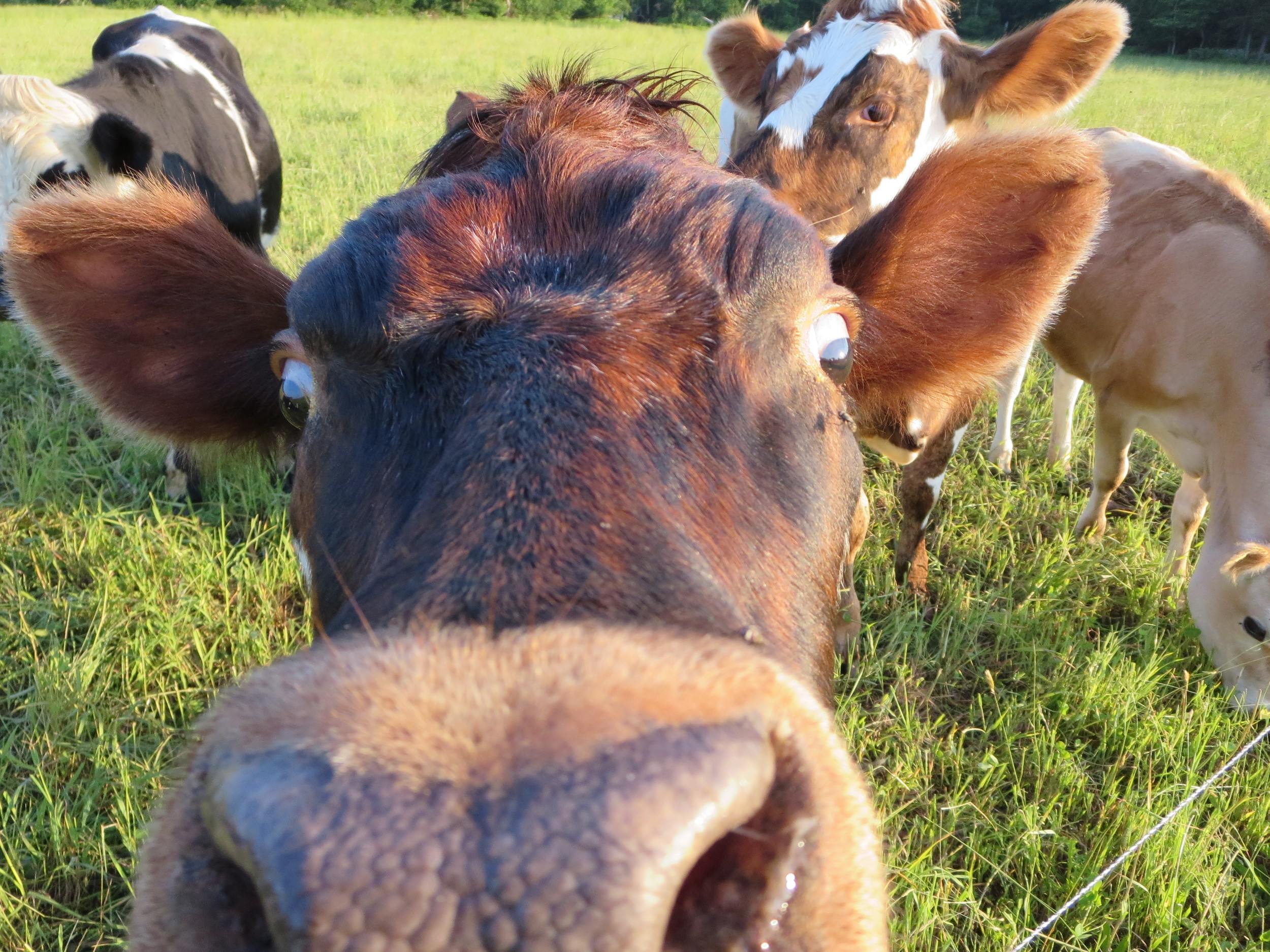
Sylvie and Segolene tell good jokes.
Welcome to Sidehill Farm – our small dairy and vegetable farm nestled on the eastern slopes of the Berkshire Hills. We sell yogurt and raw milk from our own grass-fed cows, and vegetables and fruit from our fields and greenhouses.
We're ready to hire an assistant yogurt maker! This position will begin at 20-25 hours per week, and is expected to grow to full time. Interested? Email info@sidehillfarm.net for a description of the position.
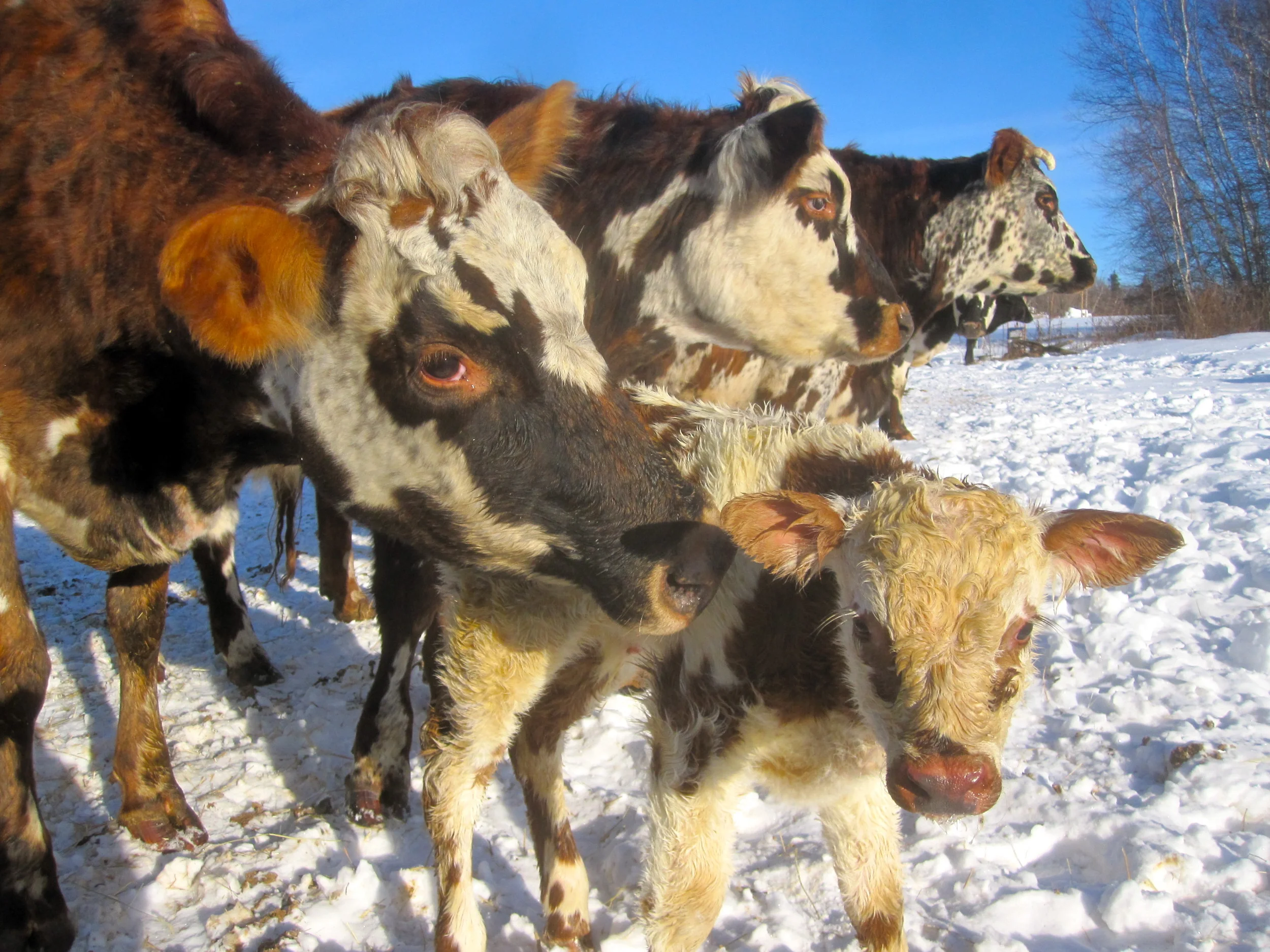
The next farm tour will be Sat, Aug 14, 1 PM, as part of the NOFA summer conference. Ever wonder where the cows are when you come to pick up milk? This is your chance to meet the girls, walk the pastures and tour the milking facilities, and see all the new calves! Meet at the milk fridge and please wear practical, washable shoes.
Real frozen yogurt, made with our yogurt, is now available at GoBerry, right on the main drag in Northampton. It actually tastes like yogurt. It's great!
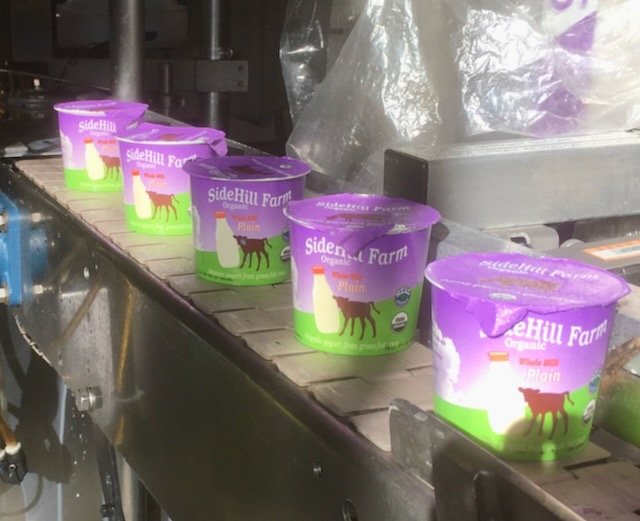
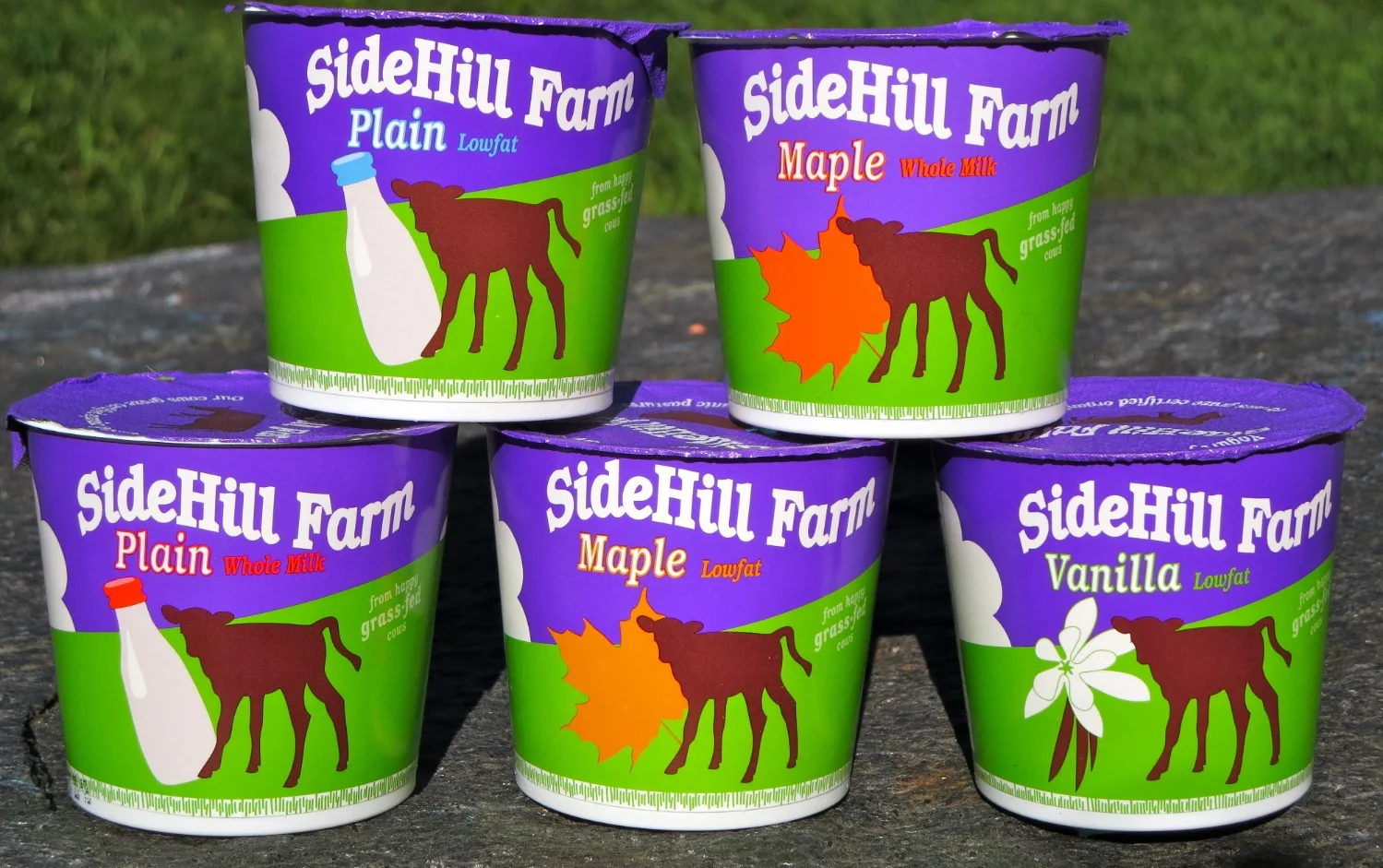
Coming soon- small containers of yogurt. People have been requesting these for 2 years, and we have finally found packaging that uses minimal plastic. We don't have an exact date yet but they should be in stores soon!
We didn't start out as farmers — we started out as good eaters. Juicy heirloom tomatoes, fresh salad greens, spicy basil, sweet and crunchy carrots — these are the vegetables that first lured us into gardening. It was a big garden, and a few fruit trees and raspberry canes - enough for us and some friends. We were producing nearly all our own food, with one glaring exception. Yogurt. We were eating nearly four quarts of yogurt a week, and the grocery bill was adding up. So we did what any sensible consumer would do in that situation. We bought three dairy cows.
Today, Sidehill Farm has grown into 3 acres of vegetables, a variety of greenhouses for summer tomatoes and winter salad greens, and a herd of 35 grass-fed Normande and Canadienne cows that produce delicious raw milk and yogurt. We milk seasonally, from March to December, so both we and the girls can take a break in the winter months. Our cows eat certified organic pasture in the spring, summer, and fall, and hay cut from those pastures in the winter.
Farming on this small scale permits us to focus on health — not just of our customers and cows, but of our soils, our crops, the local working rural landscape, and the robust biological and human community within which we all thrive. It also allows us to build good relationships with our customers, many of whom we know by name from farmers' markets and visits to the farm. We like to think that explains why we have been blessed with many sweet stories of kids hugging jugs of their favorite milk, and adults eating spring spinach like potato chips- straight out of the bag while driving home.
Garlic and scallions are the first crops up in the spring.
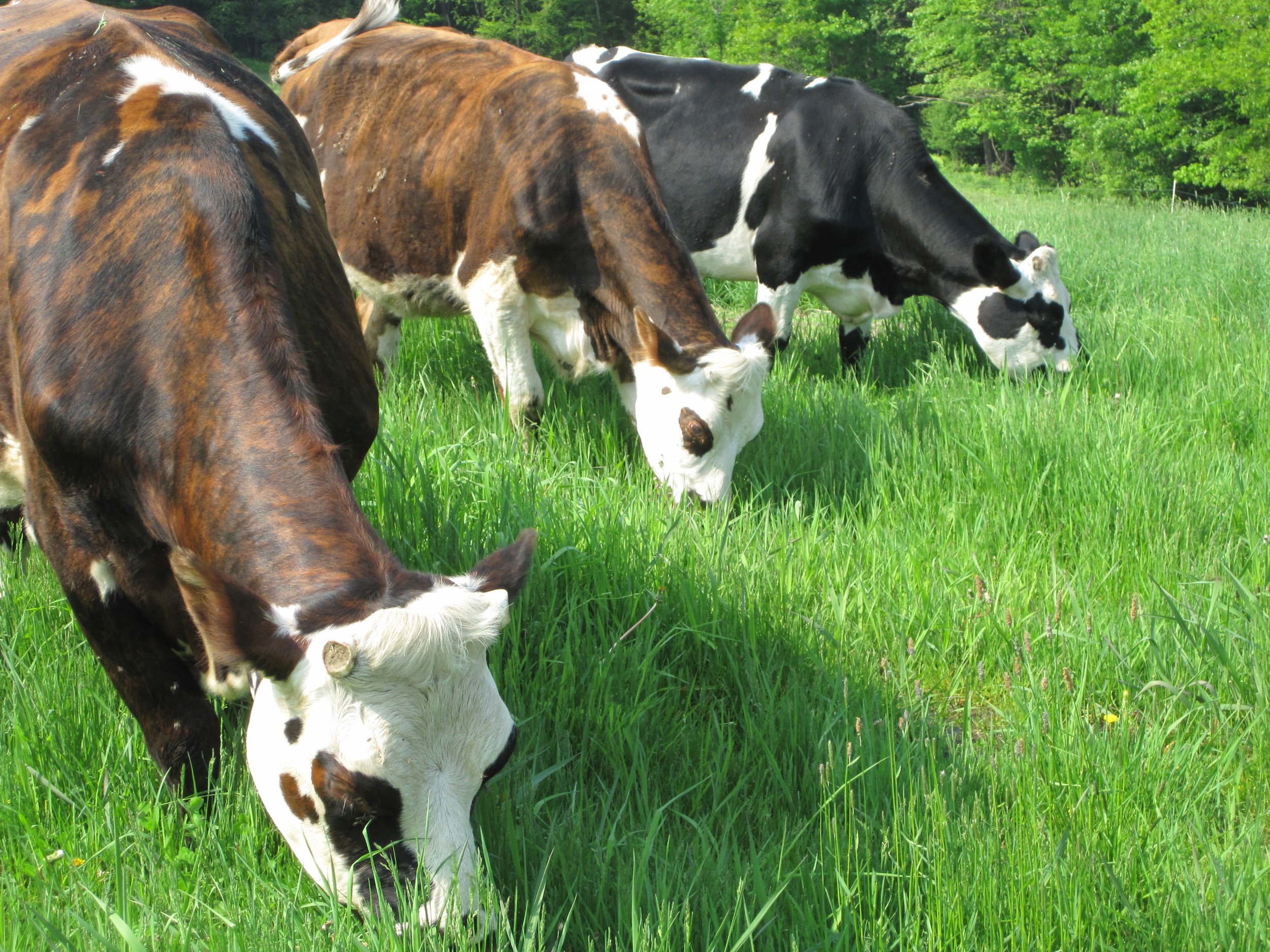
The sound of munching fills the air
Winter hoop houses double as summer bean trellises.
Ah, the Mediterranean climate of Ashfield…
A farm, by definition, is a departure from nature — it is land taken from its wild state and turned to human ends. But it is possible for a farm to learn from natural systems, to work with mother nature and integrate her patterns. This is the soul of organic agriculture; it is also a practical way to produce high quality food while building soil and conserving the habitat and biodiversity that come with well-managed open land. No farm will ever approach the ecological sophistication of nature, because the balance of activity is focused on the needs of our one species. But that doesn’t mean we can’t take good care — and a little better care every year, as we learn, and learn. This is organics at its best — good stewardship of the various communities that overlap to create a farm.
At Sidehill Farm, we are constantly improving our systems, so that they flow more directly from the examples we see in nature. We resist quick fixes like antibiotics and organically approved pesticides that ameliorate short-term problems while hiding or creating deeper issues. We select for plants and animals that balance productivity with ruggedness and adaptability. We work with and foster the various microclimates found on our farm. We are mildly obsessed with soil and the density of life within it. We select and develop technologies that respect natural systems and use energy efficiently. And we are amazed at how much better we can always do, how much we have to learn.
We often jokingly say that we have never certified our vegetables because the National Organic Program isn‘t strict enough to acknowledge how we farm. More seriously, we believe that growing crops organically is a management decision; but certifying crops as organic is a marketing decision. We are blessed with local vegetable customers who enjoy our food and know us by name and face. They know they are welcome to stop by the farm anytime, and observe our management practices. They have given us one of the most precious things a farm can earn from it‘s customers: their trust. We are grateful that they don‘t require us to seek certification — certifying a farm that grows more than 30 different vegetables is a pile of paperwork, and we much prefer to spend this time improving our management! Learn more about our veggies.
Ripe tomatoes in June!
Snow outside, optimism inside: April in a greenhouse.
The grass is always greener…
Because we have not yet met most of our yogurt customers, and had the opportunity to earn their trust, all of the land that we manage for the dairy is certified organic. This means that our cows graze exclusively on organic pastures, and approximately half of their winter hay is certified. We also feed a small amount of organic grain as a treat at milking time. The remaining winter feed- dry hay and haylage- we choose to buy from neighbors, rather than trucking in certified organic hay from hundreds of miles away. Why? Cows eat a lot of hay in winter — 40 to 50 pounds per animal, per day. All of this bulk translates into truck space, and thus into a lot of fuel burned, to move the stuff around. We cannot see that moving dried grass from state to state is a high value use of fossil fuels, especially when our neighborhood includes talented farmers who produce good quality, pesticide-free hay.
If certified organic hay becomes locally available, we will probably buy it, and at that point Sidehill Farm yogurt and raw milk will become certified products. Until then, you can rest in the knowledge that during the milking season, the cows are grazing organic pastures, and eating locally all winter! Learn more about our dairy.